Understanding the Manufacturing Process of Aluminium Windows and Doors
Aluminium windows and doors are highly valued in the construction industry for their strength, durability, and aesthetic appeal. But what exactly goes into making these essential building components? Understanding the manufacturing process can provide valuable insights for building contractors, renovators, and designers. This article delves into the step-by-step process of manufacturing aluminium windows and doors, from raw material extraction to the final product.
Step 1: Extraction and Processing of Raw Aluminum
The journey of aluminium windows and doors begins with the extraction of bauxite ore, the primary source of aluminium. Bauxite is typically found in tropical and subtropical regions. The extraction process involves:
Mining: Bauxite ore is extracted from open-pit or underground mines.
Crushing and Grinding: The bauxite ore is crushed and ground into a fine powder.
Bayer Process: The powdered bauxite is mixed with a hot, concentrated solution of sodium hydroxide. This dissolves the aluminium oxide present in the bauxite, separating it from impurities. The solution is then cooled, and aluminium hydroxide precipitates out.
Calcination: The aluminium hydroxide is heated in rotary kilns or fluidized bed calciners to remove water, producing anhydrous alumina (aluminium oxide).
Step 2: Electrolytic Reduction
To obtain pure aluminium from alumina, the electrolytic reduction process is used, also known as the Hall-Héroult process. This involves:
Electrolytic Cells: Alumina is dissolved in molten cryolite inside large electrolytic cells.
Electric Current: A powerful electric current is passed through the solution, causing the aluminium ions to separate and settle at the bottom of the cell.
Collection: The molten aluminium is periodically siphoned off and cast into ingots.
Step 3: Alloying and Casting
Pure aluminium is often too soft for structural applications. Therefore, it is alloyed with other elements like silicon, magnesium, and zinc to enhance its properties. The alloying process includes:
Melting: Aluminium ingots are melted in large furnaces.
Alloying: Alloying elements are added to the molten aluminium in precise proportions.
Casting: The molten alloy is cast into billets or slabs, which are then cooled and solidified.
Step 4: Extrusion
Extrusion is a critical step in shaping aluminium into profiles suitable for windows and doors. The extrusion process involves:
Heating Billets: Aluminium billets are heated to around 800-925°F (427-496°C) to make them malleable.
Extrusion Press: The heated billet is placed into an extrusion press, where a hydraulic ram pushes it through a die with the desired cross-sectional profile.
Cooling: The extruded profiles are cooled using air or water quenching.
Stretching: The profiles are stretched to straighten any distortions caused during the extrusion process.
Cutting: The profiles are cut to the required lengths for further processing.
Step 5: Surface Treatment
To enhance the durability and aesthetic appeal of aluminium profiles, surface treatments are applied. Common treatments include:
Anodizing: This electrochemical process increases the thickness of the natural oxide layer on the aluminium surface, improving corrosion resistance and allowing for colouring.
Powder Coating: Aluminium profiles are sprayed with a dry powder paint, which is then cured under heat to form a protective and decorative layer.
Painting: Liquid paint can also be applied, providing a wide range of colour options and finishes.
Step 6: Fabrication of Frames
Once the aluminium profiles are ready, they are fabricated into window and door frames. The fabrication process includes:
Cutting and Machining: Profiles are cut to the required sizes and shapes. Machining processes, such as drilling and milling, create holes and slots for hardware and assembly.
Assembly: The cut and machined profiles are assembled into frames using fasteners, welding, or crimping. Corner joints are often reinforced for added strength.
Glazing: Frames are fitted with glazing beads and prepared for the installation of glass panes.
Step 7: Installation of Glass
The glass used in aluminium windows and doors can be single, double, or triple glazed, depending on the desired thermal and acoustic performance. The glazing process includes:
Sealing: Glass panes are sealed into the frames using high-performance sealants and gaskets to ensure airtightness and waterproofing.
Insulating: For double or triple glazing, spacer bars filled with desiccants are used to keep the space between panes dry and free of condensation.
Finishing: Final checks are performed to ensure the glazing is secure and meets quality standards.
Step 8: Quality Control and Testing
Quality control is an essential aspect of the manufacturing process to ensure that aluminium windows and doors meet industry standards and customer expectations. Quality control measures include:
Dimensional Checks: Profiles and frames are measured to ensure they conform to specified dimensions and tolerances.
Surface Inspection: Surface treatments are inspected for uniformity, adhesion, and any defects.
Performance Testing: Finished windows and doors undergo tests for water tightness, air tightness, thermal insulation, and structural integrity.
Certification: Products that meet the required standards are certified and labelled accordingly.
Step 9: Packaging and Shipping
The last step in the manufacturing process is packaging and shipping. Proper packaging is crucial to protect the products during transit and storage. This involves:
Protective Wrapping: Windows and doors are wrapped in protective materials, such as bubble wrap or foam, to prevent scratches and damage.
Palletizing: The wrapped products are placed on pallets and secured with straps or shrink wrap.
Labelling: Each package is labelled with details such as product type, dimensions, and shipping information.
Shipping: The packaged products are loaded onto trucks or containers and shipped to distributors, retailers, or directly to construction sites.
Conclusion
The manufacturing process of aluminium windows and doors is a complex and meticulous procedure that transforms raw bauxite ore into high-performance building components. Each step, from extraction and processing to extrusion, surface treatment, fabrication, glazing, and quality control, is crucial in ensuring the final product meets the highest standards of durability, energy efficiency, and aesthetic appeal.
For building contractors, renovators, and designers, understanding this process provides valuable insights into the quality and capabilities of aluminium windows and doors. This knowledge can aid in making informed decisions when selecting materials for projects, ensuring that the chosen products will perform well and meet the specific needs of the building environment.
As the demand for sustainable and efficient building materials continues to grow, the aluminium windows and doors industry will see further advancements in technology and processes. These innovations will enhance the performance and environmental benefits of aluminium products, making them an even more attractive choice for construction and renovation projects.
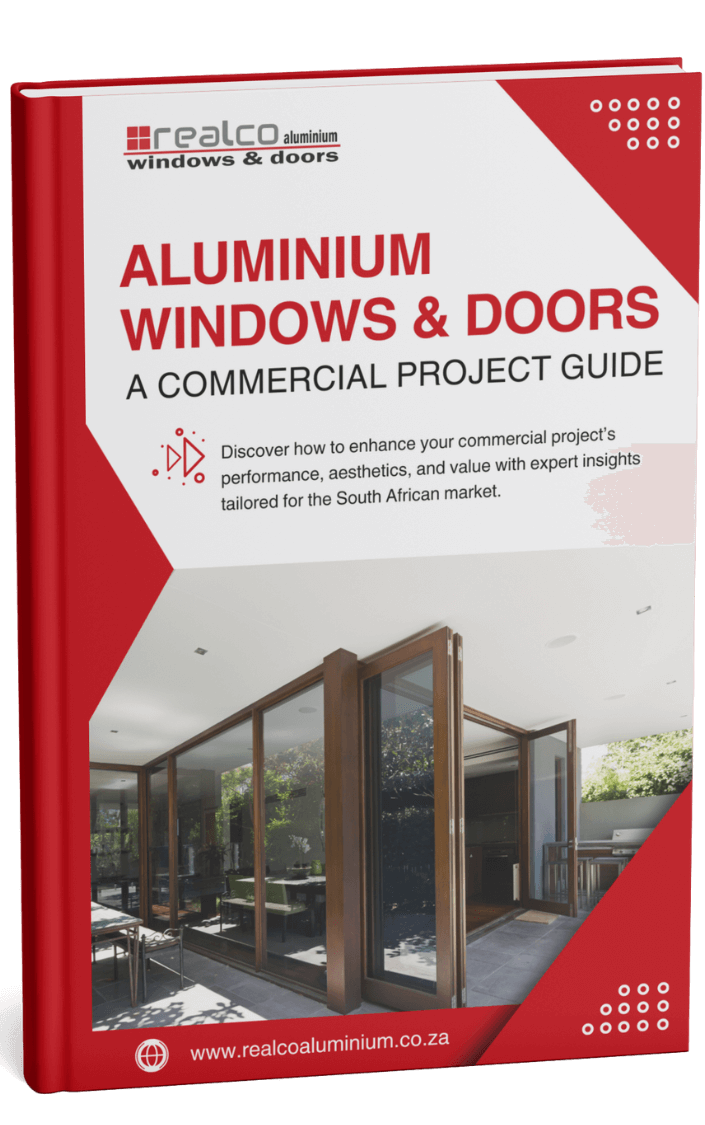
Download our Free Commercial Project Guide!
Discover how to enhance your commercial project’s performance, aesthetics, and value with expert insights tailored for the South African market.
